When a company or investor decides to build a solar plant, one of the first questions is where: on the roof of an existing building or on land. Both are mature solutions and we have delivered both many times — from rooftop plants on industrial buildings in Sarajevo and Vogošća to ground-mounted plants in Donji Vakuf, Tešanj, Bugojno and Trnovo. But they are not interchangeable: the economics, the procedure and the risks are different. This article covers what actually decides the matter.
The first question: who is the plant for?
Before comparing the engineering, it is important to be clear on the plant’s purpose:
- A plant for self-consumption — the company wants to cut its electricity bill. The key is then to connect the plant to the building’s internal installation and size it to consumption. The roof of that same building is almost always the first candidate.
- A plant for generating and selling energy — the investor builds the plant as a business in its own right. A building is not a requirement, and a ground-mounted plant is often the natural choice.
In the Federation of BiH, prosumer status comes with a capacity limit and is tied to the building’s connection capacity. We do not repeat the details here — see our article on prosumers in the FBiH and RS. For this topic it is enough to know that the regime a plant operates under affects the procedure, and therefore the choice of site.
Rooftop plants: when they are the right choice
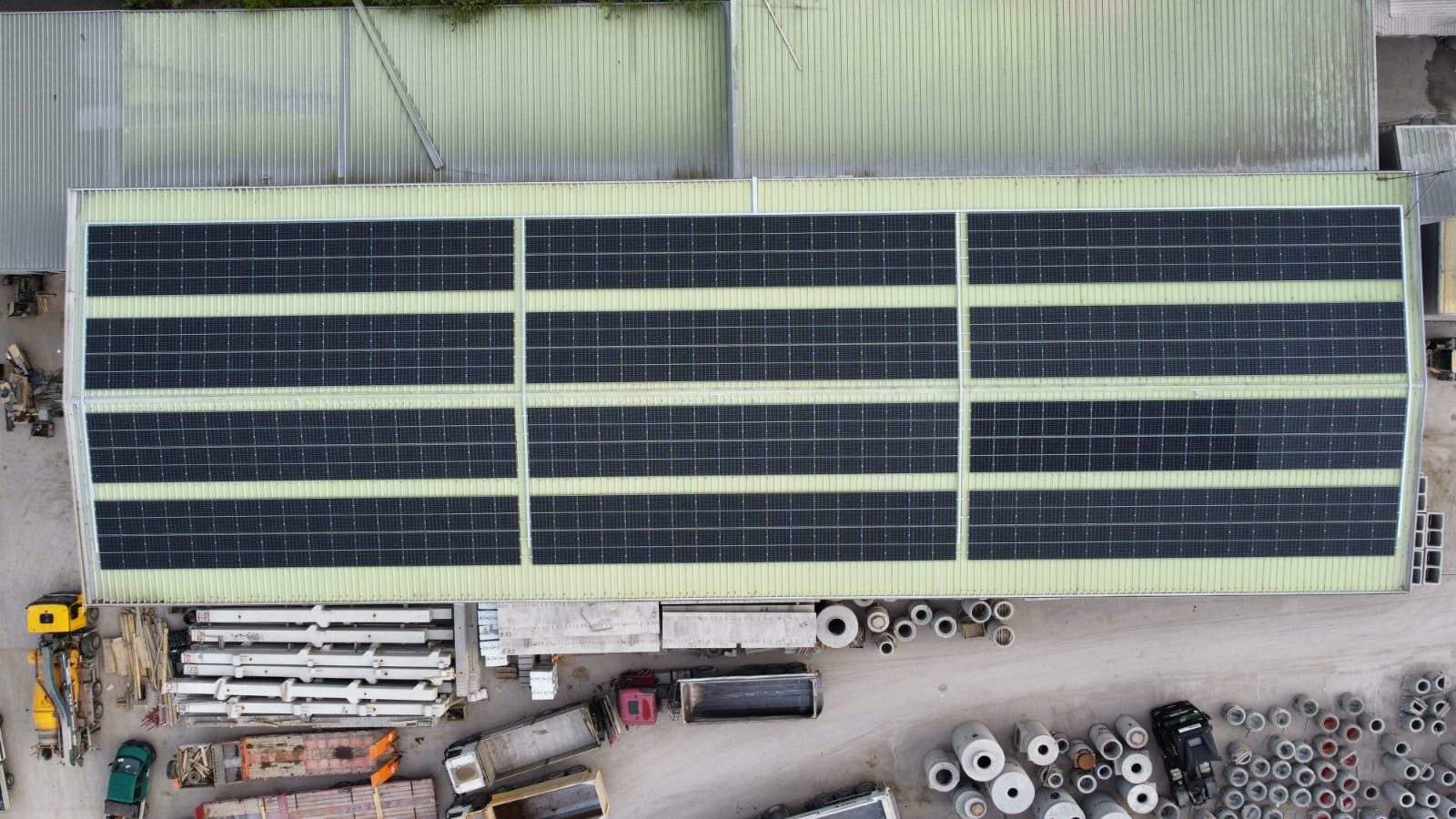
For most companies a rooftop plant is the first and most rational step. The surface already exists, the building is already connected to the grid and the switchboard is usually close by. Examples from our work include rooftop plants for Centrotrans and Bosnaplast in Sarajevo and Ferplast in Vogošća.
What needs checking:
| Check | Why it matters |
|---|
| Roof structure | Panels and mounting add a permanent load, and on flat roofs ballast can be significant. Snow and wind loads come on top. Older industrial buildings often need a structural engineer’s assessment. |
| Covering and waterproofing | The plant stays on the roof for 25+ years. If the roof will soon need refurbishing, do it before installation. |
| Orientation and tilt | A pitched roof dictates panel orientation. On flat roofs we choose between a south-facing layout and an east-west layout, which gives a flatter daily output curve and fits more panels on the same area. |
| Shading | Parapets, chimneys, HVAC units, rooflights and neighbouring buildings reduce output, especially in winter when the sun is low. |
| Fire safety | Access routes, clearances from vents and clearly labelled equipment are needed. |
| Maintenance access | Safe roof access and fall protection must be planned. |
Advantages: no land cost, shorter cable runs, a faster procedure in most cases and generation right where the energy is used.
Limitations: capacity is capped by roof area and load capacity, orientation is set by the building, and maintenance at height requires more safety measures.
Ground-mounted plants: when they make sense
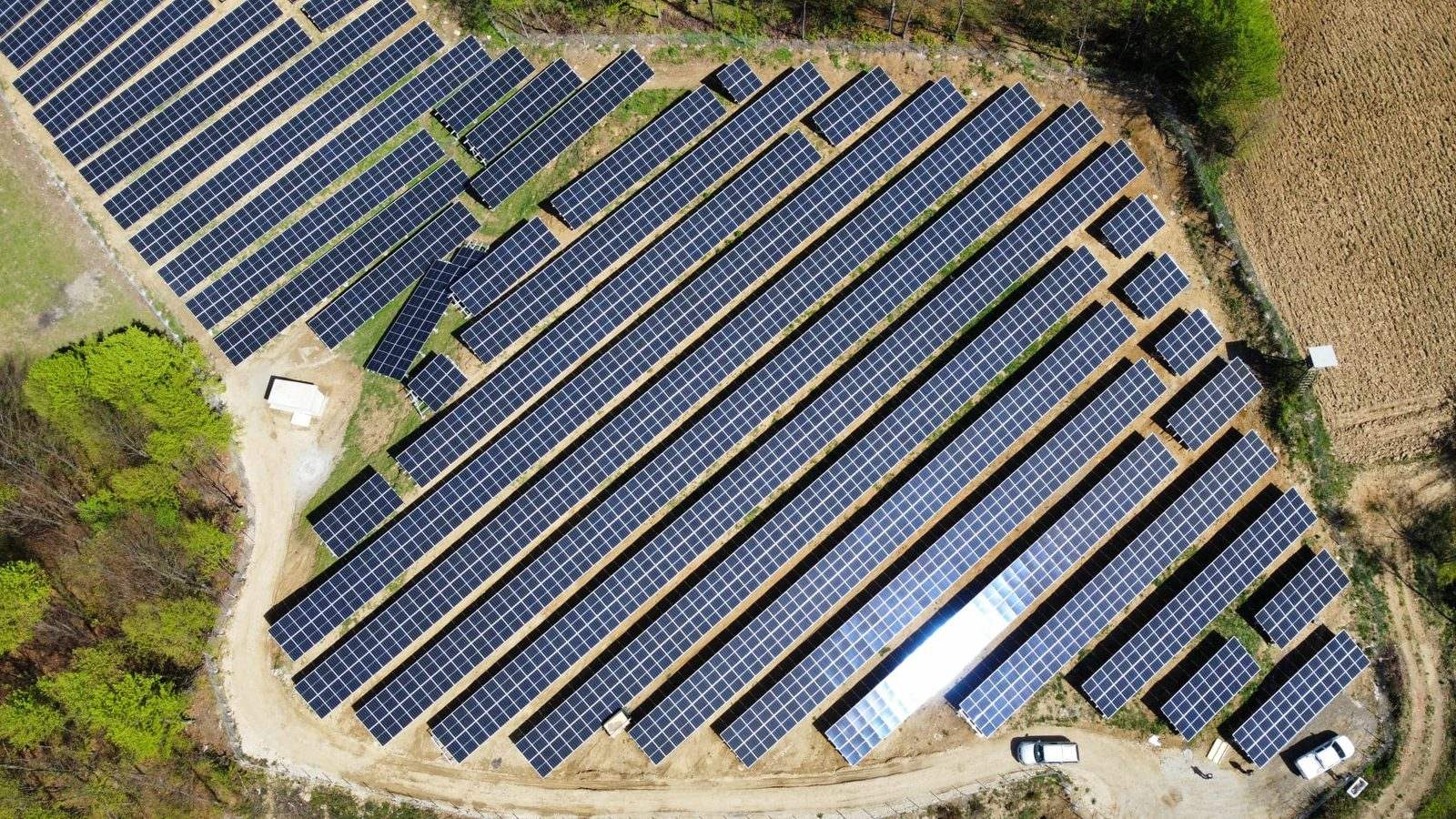
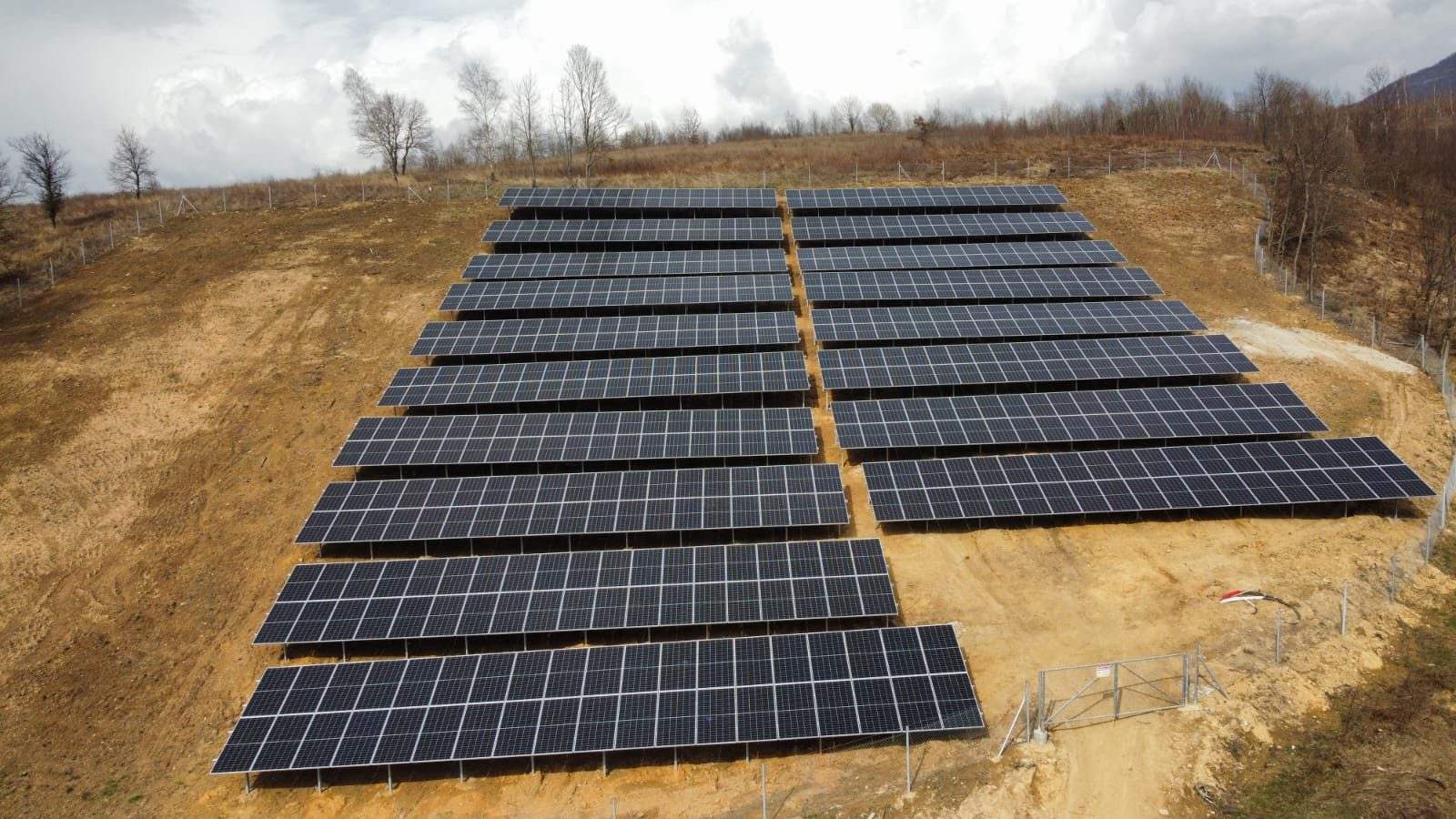
A ground-mounted plant makes sense when the roof is too small or unsuitable, when the investor is building a plant to generate energy, or when suitable land is already owned. Our examples include SHPP 2-10 Rastičevo in Donji Vakuf, where nine plants of 150 kW each were built on one site, Luminus 1 in Medakovo near Tešanj, Spectron in Bugojno and Trebečaj in Trnovo.
What determines whether land is suitable:
- Land use and spatial plans. Not every plot is designated for an energy facility. Checking the designated use in the spatial planning documents is the first step, before any design work.
- Ownership and title. Clear ownership or a long-term lease, an access road and any easements needed for the cable route.
- Terrain and slope. Gentle south-facing slopes are favourable. Steep ground, north-facing slopes and landslide-prone areas raise costs or rule a site out.
- Horizon shading. In the hilly parts of BiH, surrounding hills and forest can shorten the hours of sun, particularly in winter. This has to be simulated, not judged by eye.
- Ground and foundations. Mounting structures are most often founded on driven or screwed piles. Rocky ground or made-up fill needs different solutions, so a geotechnical check is worthwhile.
- Distance to the grid. This is often decisive. If the nearest suitable connection point is far away or has no spare capacity, connection costs can change the business case considerably.
Advantages: optimal orientation and tilt, no roof load limits, easier access for cleaning and servicing, room to expand.
Limitations: land, fencing and CCTV, a more involved procedure and, as a rule, longer preparation before the first pile goes in.
Mounting structures: what differs
On a roof, the structure is adapted to the covering: on metal roofs panels sit on rails fixed to the sheeting or purlins, while flat roofs use ballasted or anchored systems. The aim is to load the roof as little as possible and keep the waterproofing intact.
On the ground, fixed steel or aluminium structures are used, with a tilt chosen for the site. Row spacing is a trade-off: wider spacing reduces row-to-row shading but needs more land. The lower edge of the panels must sit high enough to clear snow and allow grass cutting.
Grid connection
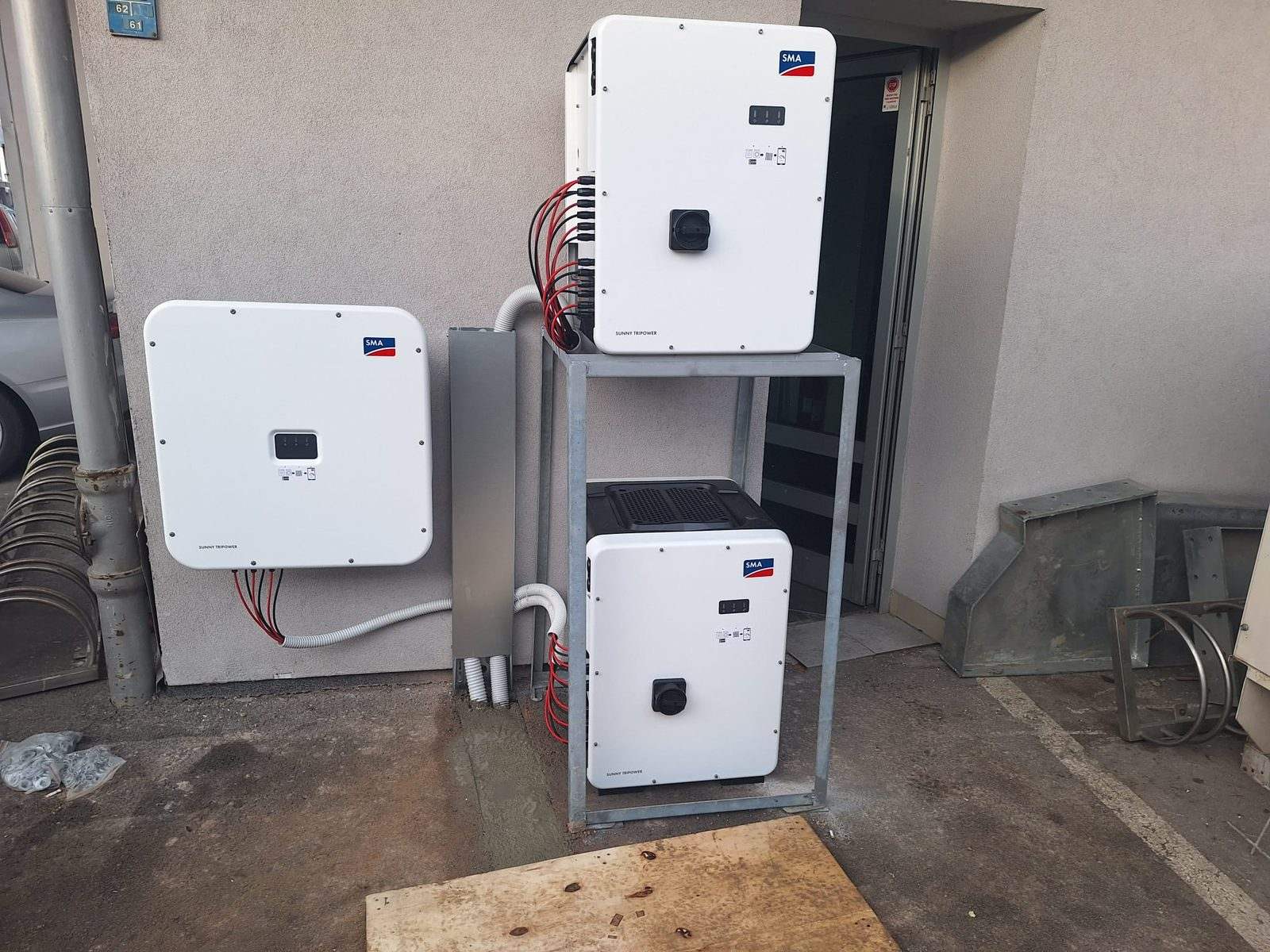
A rooftop plant for self-consumption connects to the internal installation of a building that already has a grid connection, so the technical side is usually simpler. A ground-mounted plant typically needs a new connection, sometimes including a transformer substation. The distribution system operator sets the conditions, and both cost and timeline depend on them. That is why we recommend checking connection conditions very early — before buying or leasing land.
What drives the cost
We do not quote a price “per kWp” without seeing the site, but the main factors are well known:
- Roof: covering type and structure, any refurbishment or reinforcement, building height and access for installation, cable length to the switchboard.
- Ground: land (purchase or lease), site preparation, foundations, fencing and monitoring, access road, grid connection and any substation, design documentation and permitting.
Panels and inverters cost much the same either way. The difference lies in the structure, civil works and grid connection.
Maintenance and access
Ground-mounted plants are easier to reach: cleaning, thermography and module replacement are done from the ground. Allow for grass cutting and vegetation control, as grass and shrubs can shade the lower rows. Rooftop plants need safe access and work at height, but are better protected from damage and theft. There is more on this in our article on solar plant maintenance.
A third option: solar carports
Where the roof is unsuitable and there is no land, companies with a large car park can install solar carports. The structure is more demanding and more expensive, because it has to carry panels above vehicle height and withstand snow and wind. In return, the car park gains shade and shelter and the plant stays close to the building. Carports pair well with EV charging points.
How to make the decision
In practice, the sequence looks like this:
- Consumption analysis — if the goal is self-consumption, how much energy you use and when.
- Roof check — area, structure, condition, orientation, shading.
- If the roof is not enough — check the car park for carports or nearby land.
- For a ground-mounted plant — land use, ownership, terrain, connection conditions.
- Yield simulation and cost comparison for the realistic options.
Sometimes the best answer is a combination: the roof for self-consumption and a separate ground-mounted plant as a generation investment. For the wider picture, read our guide to commercial solar in BiH.
Conclusion
For most companies the roof is the logical first step, while ground mounting makes sense when the roof is not enough or the plant is a business in its own right. The decision should not rest on a photo from the internet, but on the structure, the land, the grid connection and the numbers for the specific site. Since 2011 we have completed 71 projects totalling around 30,000 kWp, on roofs and on the ground. If you are weighing up either option, send us the basics via the quote form or get in touch — we will review the site and propose a solution.
Before talking to any installer, go through our pre-installation checklist.