
Services
Renewable electricity generation
SHPP develops projects and generates electricity from renewables — solar, hydro, wind, cogeneration and biogas — using the potential of BiH.
What you get
- Local, clean electricity that reduces dependence on fossil fuels.
- Experience from the other side of the meter: as a producer we understand grid, market and regulatory requirements.
- Partnerships with owners of land, roofs and sites with generation potential.
- Project-development know-how that we also bring to our clients' projects.
Besides building plants for clients, SHPP generates electricity from renewable sources itself. This follows our mission: produce energy from renewables to protect nature, using the latest technology.
Who this page is for
- Owners of land and large roofs who want their site to generate energy.
- Investors and partners interested in co-investing in renewable projects.
- Local communities and municipalities considering renewable energy projects.
What we do
We develop and run projects generating electricity from:
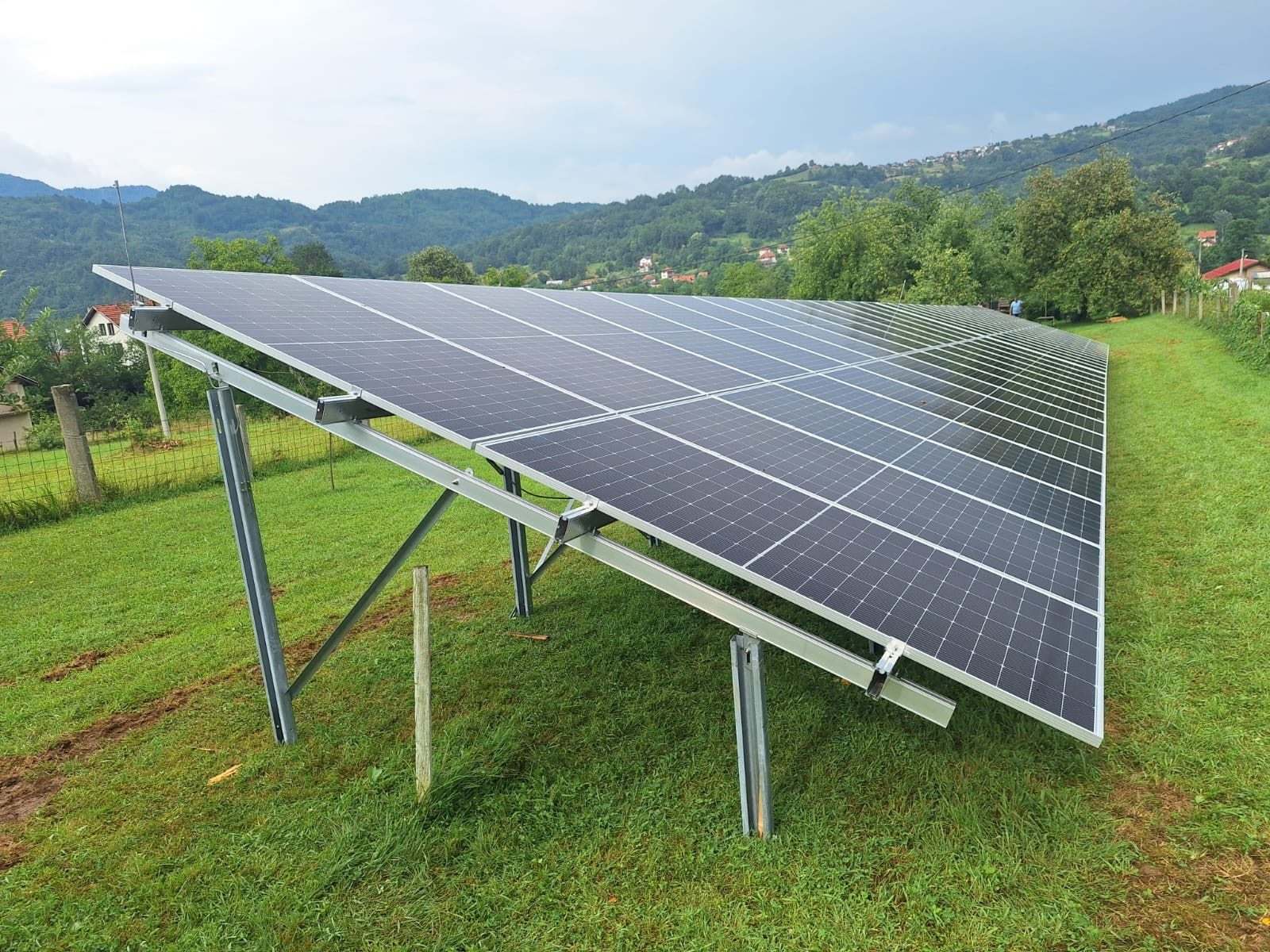
- solar energy — rooftop and ground-mounted PV plants,
- small hydropower, respecting environmental conditions and river protection,
- wind energy,
- cogeneration — combined production of electricity and heat,
- biogas from agricultural and food-industry residues.
Bosnia and Herzegovina’s potential
BiH has good natural conditions for renewables: many rivers, more sunshine hours in the south, windy mountain sites in Herzegovina, and forests and agriculture as a biomass source. At the same time, electricity generation in BiH still relies heavily on coal-fired plants, so every new megawatt from renewables helps cut emissions.
The legal framework has been changing: in 2023 the Federation of BiH adopted a new renewable energy law introducing prosumers and auctions for support schemes, and Republika Srpska has had a new renewable energy law since 2022. Check current regulations before starting a project — procedures differ between the entities.
How we develop a project
- Resource and site assessment — measurements or reliable resource data, grid access, land ownership.
- Feasibility study — technical concept, yield estimate, costs and revenues.
- Permits and grid connection — according to entity, cantonal and municipal rules.
- Construction and connection.
- Operation, monitoring and maintenance over the plant’s entire lifetime.
What we look for in a site
A good site for a generation plant has a reliable resource, clear land ownership, road access and — often decisive — available grid capacity nearby. If any of these is missing, we say so openly in the first assessment, before time and money go into documentation.
Why SHPP
Since 2011 we have built 30,000 kWp of solar capacity across 71 projects, including ground-mounted plants. We bring a producer’s experience to our clients: we know what the grid, the regulator and the bank expect. If you have a site with potential, get in touch.
Renewable generation
How we work together
-
Site identification
Resource assessment (solar irradiation, water flow, wind), grid access and land ownership status.
-
Feasibility study
Technical concept, yield estimate, costs, revenues and risks.
-
Permits and grid connection
Procedures with the authorities, regulator and grid operator, in line with entity regulations.
-
Construction and commissioning
Equipment procurement, construction, testing and grid connection.
-
Operation and maintenance
Plant management, monitoring, maintenance and sale of the electricity produced.
Frequently asked questions
Questions about this service
Can I offer my land or roof for a power plant?
Yes. If you have land or a large roof with good grid access, get in touch — we will assess the site's potential and possible cooperation models (lease, joint investment).
Which renewable sources have the most potential in Bosnia and Herzegovina?
BiH has significant hydro and solar potential (especially in the south), wind potential in the mountains of Herzegovina, and biomass from forestry and agriculture. Solar is growing fastest because it is the simplest and quickest to build.
How is electricity from a new plant sold?
Depending on size and entity rules: on the market (directly or via a trader), through power purchase agreements (PPAs), or through support schemes awarded by the authorities, for example via auctions in the Federation of BiH. Check current regulations, as support models change.
What is the difference between a self-consumption plant and a generation plant?
A self-consumption plant primarily reduces the building's bill, with surplus handled under prosumer rules. A generation plant is built to sell energy to the grid and follows a different licensing and connection process.
Other services
-
Solar PV plants
Rooftop and ground-mounted solar plants for businesses and households in Bosnia and Herzegovina — from load and roof analysis to grid connection.
-
Energy consulting
Energy audits, consumption and tariff analysis, feasibility studies and a costed action plan to cut energy spend — with financing and CBAM guidance.
-
Reactive compensation
Paying for excess reactive energy? We design and install turnkey reactive power compensation — the energy investment with the shortest payback.
-
EV charging
Design and installation of AC, fast and ultra-fast DC chargers for businesses, fleets, hotels and car parks — with smart load management.
-
Electricity brokerage
In a liberalised market, business electricity prices differ from one company to the next. We help you understand offers, compare suppliers and cut costs.
How much could your own plant save you?
Send us your basic consumption data — we will prepare a concept design and a payback estimate.