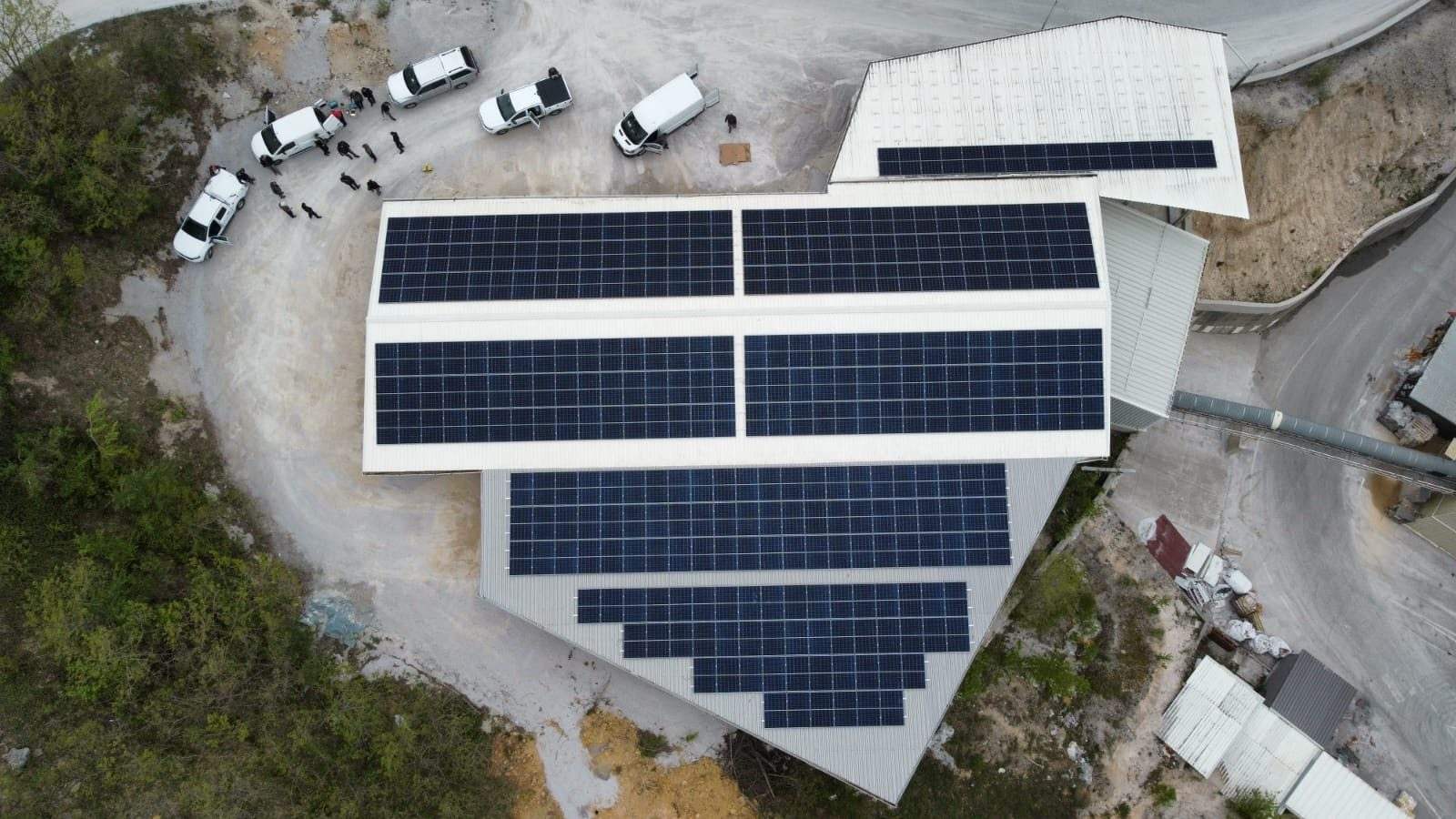
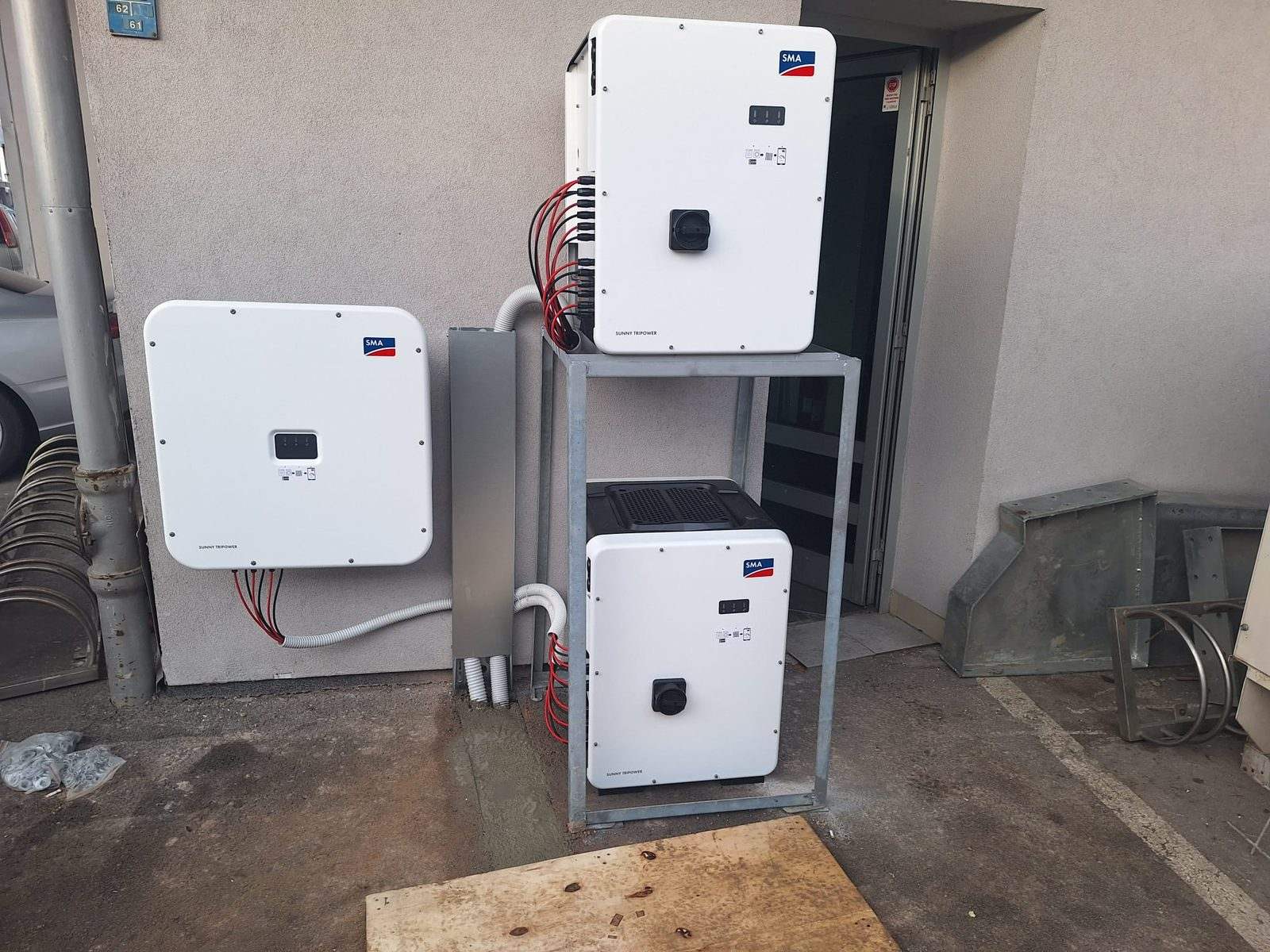
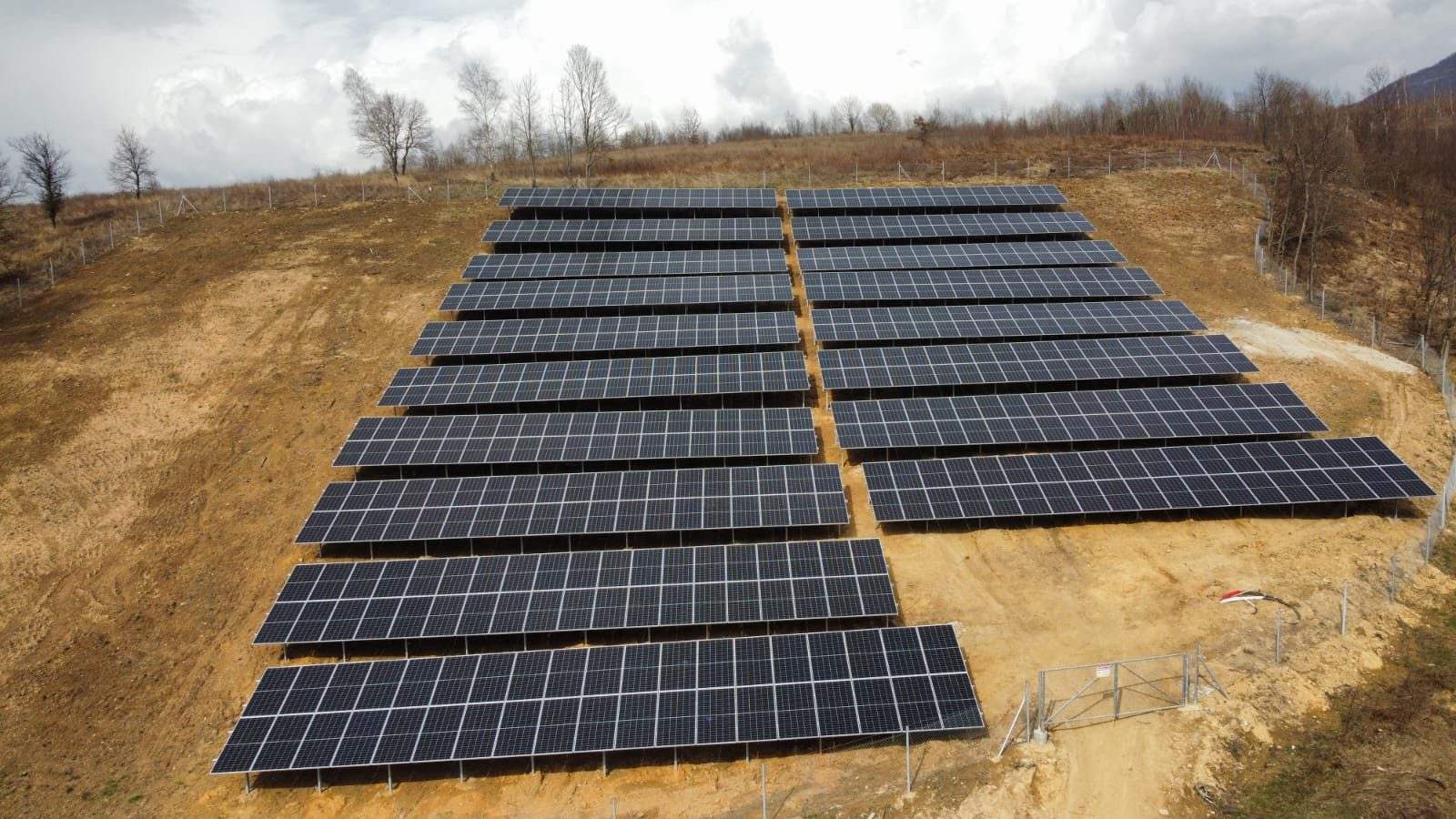
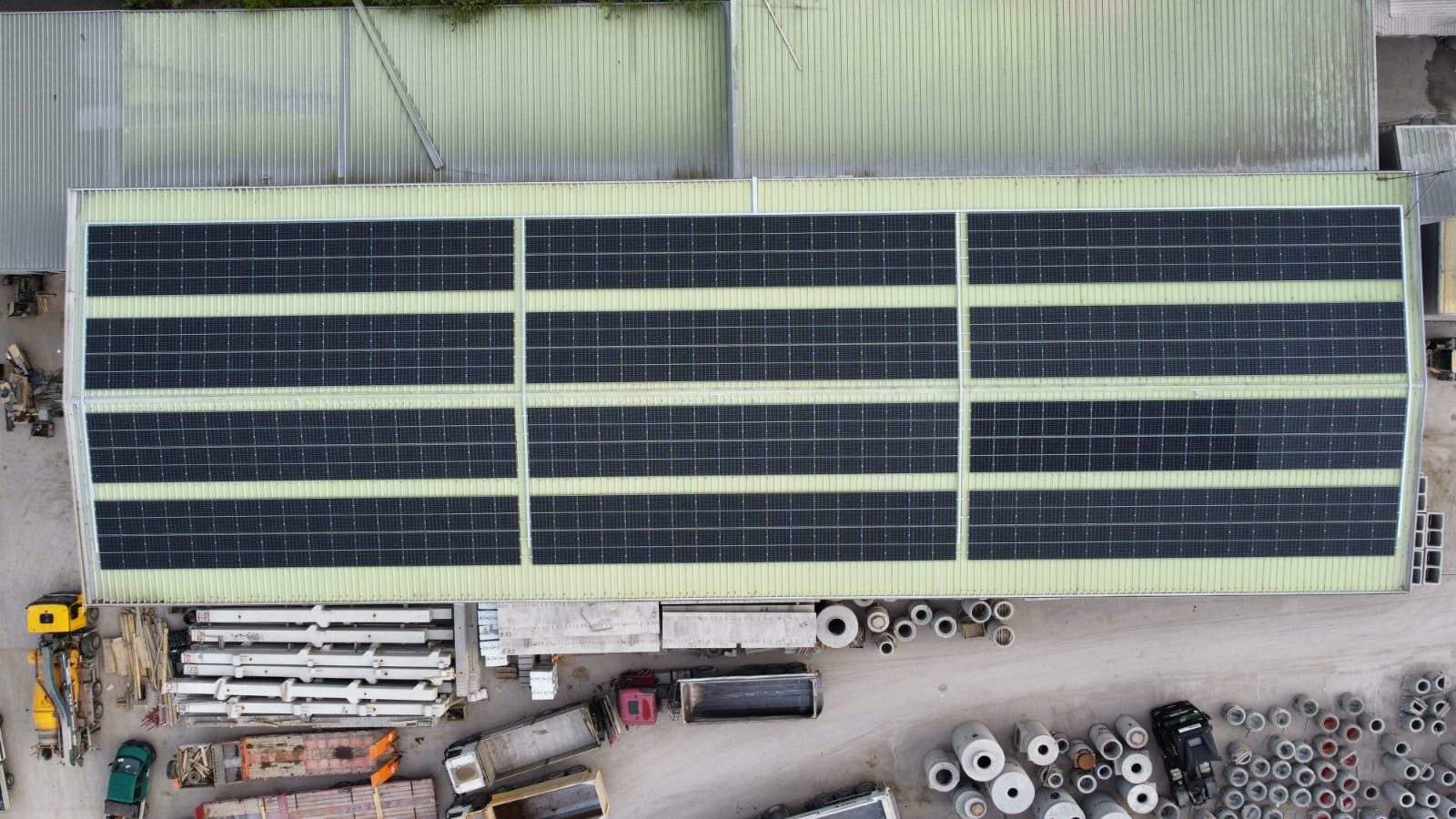
A solar plant on a warehouse or office roof is today one of the most rational infrastructure investments for many companies in Bosnia and Herzegovina. But “it pays off” is not an answer on its own: it pays off if it is well sized, correctly connected and financed the right way. This guide walks through every step — from the first look at your bill to commissioning.
Why businesses in BiH are investing in solar now
Three reasons come up in almost every client conversation:
- Business electricity prices. In the Federation of BiH, the 2023 Electricity Act limited the right to public supply to households, customers of special social importance and small customers (fewer than 50 employees, revenue below BAM 8 million, connection below 1 kV and consumption up to 50,000 kWh in the previous year). Other companies buy electricity on the market, where prices are set on market principles.
- Predictability. Once the plant is built, the cost of each kWh you generate is effectively fixed for its lifetime.
- Customer requirements. Exporters to the EU increasingly get questions about emissions and energy sources (see our article on CBAM).
Step 1: Start with consumption, not with the roof
The most common mistake is planning a plant “as big as the roof allows”. The economics of a commercial solar plant rest on self-consumption: every kWh you use at the moment of generation replaces a kWh you would otherwise buy at full price. Surplus fed into the grid is worth less (in the Federation of BiH, under net billing, less than the tariff price — see below).
For proper sizing we need:
- electricity bills for the last 12 months,
- if available, 15-minute or hourly consumption data (from your supplier or grid operator),
- the building’s approved connection capacity,
- operating hours and seasonality (weekend work, summer shutdowns, cooling loads).
Companies that operate during the day, five to seven days a week, with cooling or production loads, can usually consume most of the output themselves. Offices that work only on weekdays and low-consumption warehouses have more weekend surplus.
Step 2: Site and roof
| Check | Why it matters |
|---|
| Orientation and tilt | South is optimal, but east-west on flat roofs gives a flatter daily output curve. |
| Shading | Chimneys, neighbouring buildings, trees and rooftop equipment reduce output. |
| Structural capacity | Panels and mounting add load; on flat roofs ballast can be significant. |
| Roof covering and waterproofing | Panels stay 25+ years — refurbish first if needed. |
| Distance to the switchboard | Longer cable runs mean higher cost and losses. |
As a rough guide, public solar-resource datasets show annual yields in the order of 1,500 kWh per kWp for optimally oriented systems in BiH, with more sun in the south (Mostar) than the north (Banja Luka, Tuzla). Actual yield on a specific roof depends on orientation, tilt and shading and can be noticeably lower — which is why we simulate every building.
Step 3: What determines the cost of a solar plant
A serious price cannot be given “per kWp” without seeing the site. It depends on:
- plant size — larger plants have a lower cost per kWp,
- roof and mounting type — a pitched metal roof is simpler than a ballasted flat roof or a ground-mounted structure,
- equipment — panels and inverters from different manufacturers differ in efficiency, warranties and reliability,
- electrical works — switchboard condition, cable runs, protection, any need to increase connection capacity,
- documentation and approvals,
- monitoring and maintenance.
Step 4: How to calculate payback
Payback is calculated from annual savings and the investment cost. Simplified:
Annual saving ≈ (self-consumed solar energy × price you pay per kWh) + value of surplus − maintenance costs
Simple payback ≈ investment ÷ annual saving
Illustration (assumed values, not a quote): a 100 kWp plant at a site with an estimated 1,300 kWh/kWp would produce around 130,000 kWh a year. If the company consumes 90% of it, that is 117,000 kWh not bought from the grid — the saving is that number multiplied by your price per kWh (energy plus the consumption-based part of network charges).
Payback is further affected by:
- the price you pay for electricity — the higher it is, the faster the payback,
- self-consumption share — the single most important factor,
- panel degradation — output slowly declines over the years,
- financing — a loan or lease changes the cash flow,
- inverter replacement — inverters usually have a shorter life than panels, so plan for it.
For companies billed on peak demand, a solar plant can reduce peaks during sunny hours, but this is not guaranteed. Likewise, when the plant covers much of your active energy, the power factor may worsen — so it is worth checking reactive power compensation at the same time.
Step 5: Prosumer status and surplus settlement
In the Federation of BiH, the Law on the Use of Renewable Energy Sources and Efficient Cogeneration (Official Gazette of FBiH 82/2023) and FERK’s rulebook on electricity generation for own needs (Official Gazette of FBiH 30/2024, amended 43/2025) govern prosumer status:
- a plant of up to 150 kW, and no larger than the building’s approved connection capacity,
- businesses are settled under net billing: surplus is valued at the active-energy tariff minus 10% and carried forward as a monetary credit,
- unused credits are cancelled after the first quarter for the previous 12 months, without compensation.
In practice: a commercial plant should not produce significantly more than the building consumes annually. Plants beyond these limits fall under a different regime (electricity producer), with a different procedure.
In Republika Srpska, the 2023 RERS rulebook sets schemes by plant size: net metering up to 10.8 kW, net billing above 10.8 and up to 50 kW, and a standard scheme above 50 kW. See Prosumers in the Federation of BiH and Republika Srpska for details. Regulations change — always check current rules before investing.
Step 6: Permits and grid connection
For a plant on a building’s internal installation in the Federation of BiH, the rulebook sets out this sequence:
- application for grid-connection approval (elektroenergetska saglasnost) to the distribution system operator (Elektroprivreda BiH or Elektroprivreda HZ HB, depending on the area) — before construction,
- the operator’s decision within 30 days of a complete application,
- connection agreement with the operator,
- a use permit for the plant or confirmation that none is required (under cantonal rules), plus proof that the electrical installation is safe,
- supply contract with a supplier,
- connection within 10 days of the documents being delivered.
Cantonal and municipal building rules differ, so part of the process depends on location. We manage the entire process on the investor’s behalf.
Step 7: Financing
- Own funds — simplest, fastest payback.
- Bank loan — banks in BiH offer loans for solar and energy efficiency; bill savings often cover a significant part of the instalment.
- Equipment leasing.
- Third-party ownership — the FBiH rulebook allows the plant to be owned by a third party under a separate agreement with the end customer.
Banks usually require technical documentation and a yield and savings calculation — we prepare these as part of our proposal.
Step 8: Maintenance and monitoring
A solar plant needs little maintenance, but it does need monitoring. Production monitoring immediately shows a failed string or inverter. We recommend periodic visual inspections, checks of connections and protection, and cleaning panels when soiling visibly reduces output (dust, pollen, bird droppings — more often near roads and in industrial zones).
Conclusion
A good commercial solar plant starts with a consumption analysis, not a panel catalogue. For an estimate for your building, send us the last 12 months of bills via the quote form. Since 2011 we have completed 71 projects totalling 30,000 kWp — and each one started with the same question: how much do you use, and when?
Before talking to any installer, go through our pre-installation checklist.
Sources