Many companies pay a line on their electricity bill every month that nobody in the company fully understands: excess reactive energy. The good news is that it is one of the few costs that can be almost entirely removed with a relatively small investment. This article explains what reactive energy is, how it is billed in Bosnia and Herzegovina, how to calculate the compensation required and what to watch out for.
What reactive energy is
Electrical loads in a business fall roughly into two groups:
- resistive loads (heaters, incandescent lamps) turn almost all the energy they draw into useful work — heat or light,
- inductive loads (electric motors, transformers, compressors, refrigeration units, welders, older fluorescent ballasts) also need a magnetic field to operate.
Building and maintaining that magnetic field requires reactive power (measured in kvar), and over time reactive energy (kvarh). It flows back and forth between the grid and the load and does no useful work, but it loads cables, transformers and the whole distribution network with current that causes losses.
The ratio of useful (active) power to total (apparent) power is the power factor, cos φ. The closer cos φ is to 1, the less reactive energy.
| cos φ | Reactive energy per 1 kWh active (tan φ) |
|---|
| 1.00 | 0 kvarh |
| 0.95 | ≈ 0.33 kvarh |
| 0.90 | ≈ 0.48 kvarh |
| 0.80 | 0.75 kvarh |
| 0.70 | ≈ 1.02 kvarh |
How reactive energy is billed in BiH
In the Federation of BiH, Article 14 of the General Conditions for Electricity Supply (FERK, consolidated text published in Official Gazette of FBiH 13/2023) requires a customer drawing more reactive energy than corresponds to an average power factor of cos φ = 0.95 to install appropriate compensation, and if they do not, to pay for the excess reactive energy at the applicable tariff rates. The distribution system operator may also issue a warning to carry out compensation.
Put simply, the “allowed” reactive energy is about 0.33 kvarh for every kWh of active energy. Everything above that is excess.
Billing example (illustration): a plant uses 100,000 kWh of active and 60,000 kvarh of reactive energy in a month.
- allowed: 100,000 × 0.329 ≈ 32,900 kvarh
- excess: 60,000 − 32,900 ≈ 27,100 kvarh — this quantity is billed at the tariff rate for excess reactive energy.
Which customer categories pay this item depends on the tariff group and supply model. For example, in FERK’s price decision for Elektroprivreda BiH’s public supply (applicable from 1 June 2024), excess reactive energy and billed peak demand are charged to the low-voltage (0.4 kV) non-household tariff group with contracted capacity above 23 kW. On market supply, a business bill may also include billed demand and excess reactive energy, depending on category and tariff model.
Republika Srpska and Brčko District apply their own general conditions and tariff systems — the principle is the same, but check current regulations and tariff rates for your metering point.
How to spot the problem on your bill
Take your bills for the last 12 months and look for:
- a line for excess reactive energy (“prekomjerno preuzeta reaktivna energija”, quantity in kvarh and amount in BAM),
- the ratio of reactive to active energy — if reactive is more than about a third of active, the power factor is below 0.95,
- changes during the year — a sudden rise may mean a new machine or a fault in existing compensation.
More in our guide How to read your electricity bill.
How compensation works
Capacitors generate reactive power of the opposite character to what motors consume. Installed in the facility, they let reactive energy be exchanged locally — between the capacitors and the loads — instead of through the grid. You then draw almost only active energy from the grid.
Types of compensation
- Individual — a capacitor at a large, continuously running motor or transformer. Simple, but inflexible.
- Group — for a group of loads on the same sub-distribution board.
- Central automatic — a capacitor bank with a controller at the main switchboard that switches steps in and out to follow the load. The most common solution for businesses with varying load.
- Detuned compensation — capacitors with series reactors, for networks with significant harmonics.
- Active filters and SVG devices — electronic solutions that compensate fast-changing loads and filter harmonics at the same time.
How to calculate the required power
Required compensation power is calculated from active power and the desired change in power factor:
Qc = P × (tan φ₁ − tan φ₂)
Example: a site with 200 kW peak active power at cos φ₁ = 0.75 wants to reach cos φ₂ = 0.97.
tan φ₁ ≈ 0.88, tan φ₂ ≈ 0.25 → Qc ≈ 200 × 0.63 ≈ 126 kvar.
In practice, sizing is based on power-quality measurements over a representative operating period, because bills show only monthly totals, not daily load swings.
Harmonics: the most common trap
Variable-speed drives, rectifiers, UPS units, LED lighting and inverters create harmonics — current distortion at multiples of 50 Hz. In such a network, standard capacitors can:
- resonate with the transformer’s inductance,
- overheat and quickly lose capacitance,
- further amplify voltage distortion.
The same Article 14 of the FBiH General Conditions also requires customers to keep harmonics within permitted limits. That is why modern plants often use detuned banks or active filters — more expensive, but the only correct solution.
Why compensation pays back so fast
- The saving is a whole bill line — once the power factor is above 0.95, the excess reactive energy item practically disappears.
- The investment is relatively small compared with the annual amount being paid.
- Additional benefits: lower losses in cables and transformers, less equipment heating, more stable voltage and more transformer headroom for new loads.
That is why we often call reactive power compensation the energy investment with the shortest payback. We calculate the exact payback from your bills: annual reactive energy charges versus the investment.
Solar plants and reactive energy
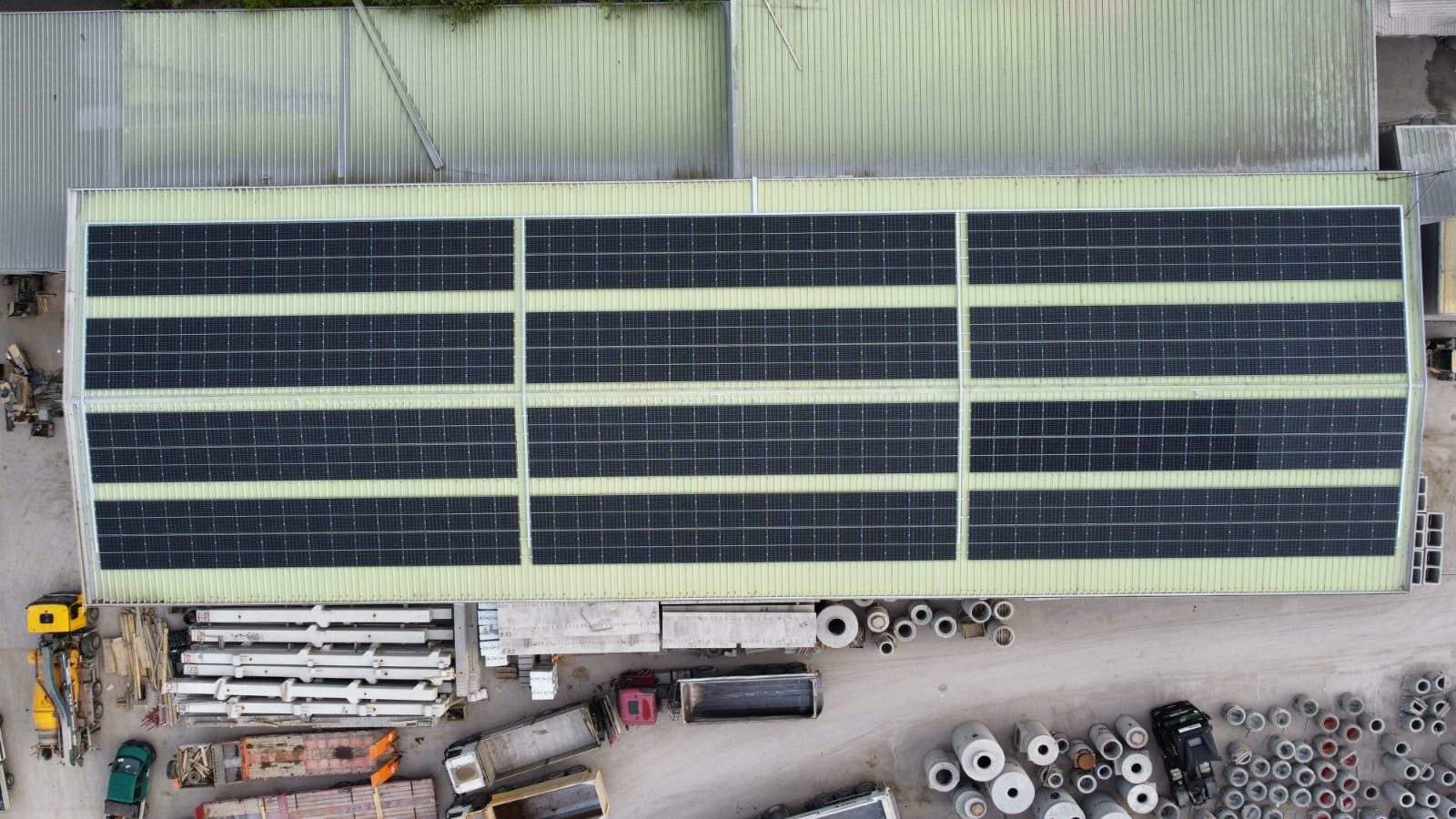
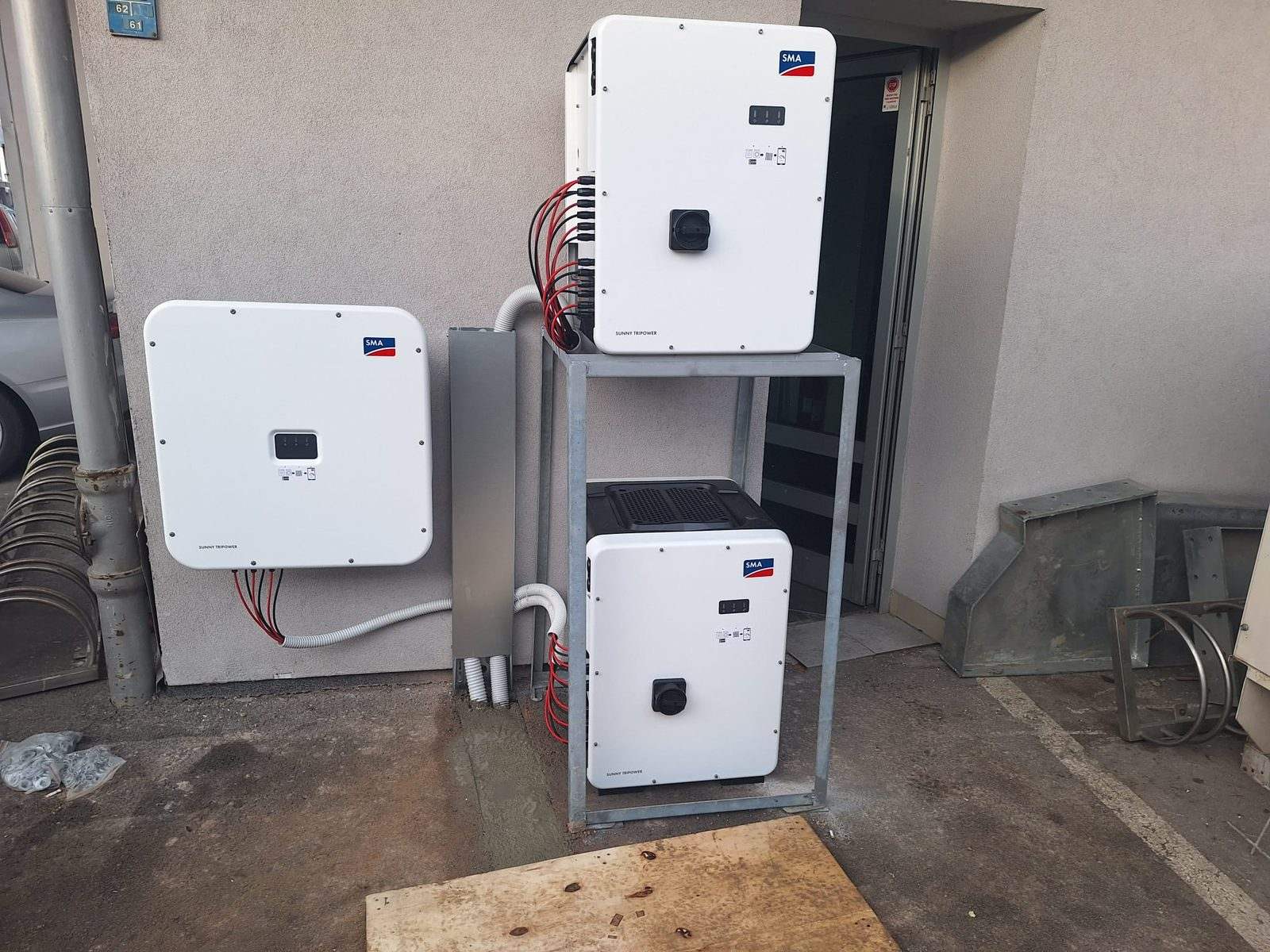
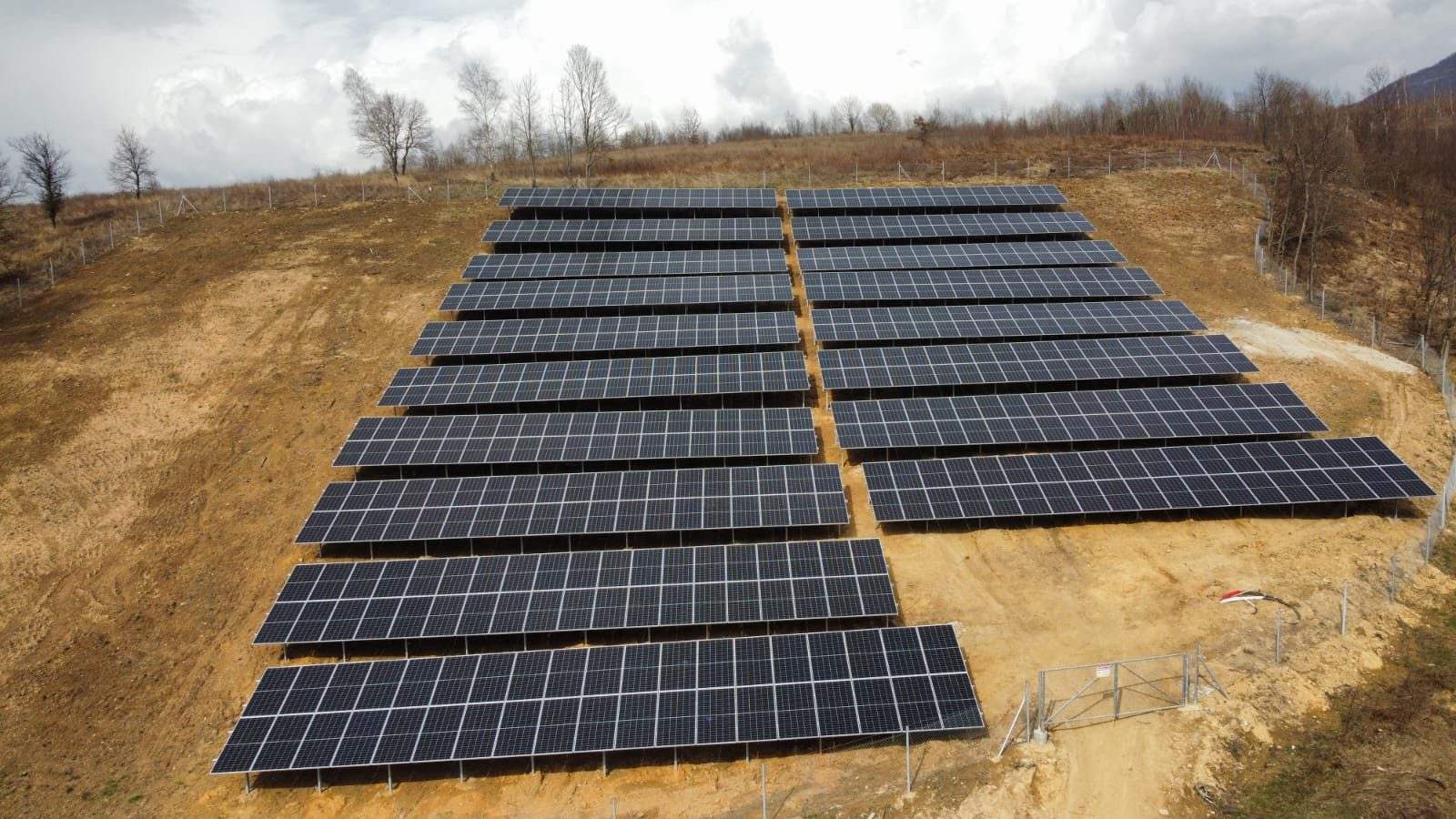
When a company installs a solar plant, active energy drawn from the grid falls while reactive energy (still consumed by motors) stays the same. The ratio changes, so the power factor at the meter can drop below 0.95 even if there was no problem before. That is why compensation should be checked — and resized if needed — whenever the site’s energy picture changes: a new production line, a solar plant or EV chargers.
Maintenance
Capacitors lose capacitance over time, and contactors and fuses wear. We recommend:
- tracking the power factor on monthly bills,
- periodic checks of capacitors, contactors, cabinet ventilation and the controller,
- re-measuring after major changes on site.
Conclusion
If you see excess reactive energy on your bill, there is almost certainly a cost-effective fix. Send us your last 12 months of bills via the quote form or see our reactive power compensation service — we deliver turnkey compensation with trusted partners, measuring before we quote.
Sources